In today’s manufacturing environment, procurement managers are being asked to do more than simply source raw materials.
They are expected to manage risk, ensure supply continuity, support production schedules, navigate market volatility, and help their organizations meet customer commitments. The role has evolved from purchasing to strategic supply chain management.
This increased focus on supply chain resilience is reflected across the industry. According to Gartner, 42% of procurement leaders identified supply disruptions as the foremost risk to future procurement success.
When everything runs smoothly, procurement teams rarely receive recognition. When disruptions occur, however, the consequences can be felt throughout the organization.
Whether you’re sourcing fatty acids, fatty alcohols, glycerin, esters, or other oleochemical products, today’s supply chains present a unique set of challenges.
Procurement professionals must navigate
A delayed shipment or unexpected supply interruption can impact far more than a purchasing department. Production schedules can be delayed. Inventory planning can become more complex. Customer commitments may become difficult to meet.
In many cases, procurement teams find themselves spending valuable time reacting to supply issues rather than focusing on strategic initiatives that drive business growth.
The cost of an unreliable supply chain extends far beyond the price of a raw material.
When oleochemical supply becomes unpredictable, the effects can be felt across an entire organization. What starts as a delayed shipment or supply shortage can quickly impact production schedules, inventory planning, customer commitments, and internal resources.
The infographic below illustrates how a single supply disruption can create a ripple effect throughout the business.
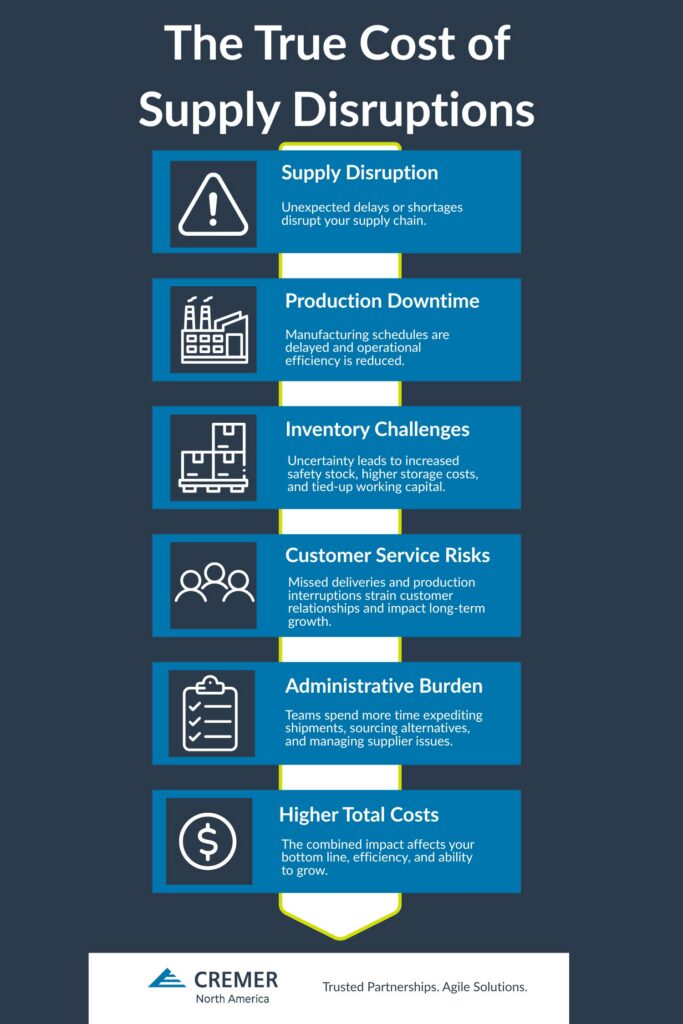
Each disruption carries hidden costs that are often overlooked. Beyond the immediate impact on supply availability, procurement teams may find themselves spending more time managing issues, expediting shipments, sourcing alternatives, and responding to operational challenges.
This is why supply continuity, responsive communication, and trusted supplier partnerships are critical components of a resilient supply chain.
In today’s market, procurement professionals need more than a supplier. They need a partner that helps reduce risk, improve supply continuity, and support long-term business objectives.
While pricing will always play a role in sourcing decisions, the most successful procurement strategies also prioritize reliability, communication, and supply chain resilience.
When evaluating oleochemical suppliers, there are five key qualities to consider:
Supply continuity remains one of the most important factors in maintaining production schedules and meeting customer demand. A dependable supplier helps minimize disruptions and provides confidence in planning and forecasting.
Quality issues can create challenges that extend beyond procurement, impacting production efficiency, production performance, and customer satisfaction. Consistency matters just as much as availability.
Market conditions can change quickly. Suppliers that communicate proactively help procurement teams make informed decisions and react more effectively when challenges arise.
The best supplier relationships provide more than products. They provide insight. Understanding market trends, feedstock availability, and supply chain developments can help organizations plan more effectively and reduce uncertainty.
Strong partnerships are built on trust, transparency, and a shared commitment to success. Procurement teams benefit from suppliers that understand their business and work collaboratively to solve challenges.
As supply chains become increasingly complex, procurement managers are often tasked with balancing global market dynamics with local operational needs.
A supplier with global sourcing capabilities can help provide access to diverse supply options and mitigate risk during periods of market volatility. At the same time, local inventory, logistics expertise, and responsive customer service help ensure products are available when and where they are needed.
This combination of global reach and local support creates a stronger foundation for supply continuity and business growth.
The strongest supply chains are not built during periods of stability. They are built through preparation, planning, and trusted partnerships.
Organizations that prioritize supply continuity, communication, and long-term supplier relationships are often better positioned to navigate uncertainty and respond to changing market conditions.
For procurement managers, the goal is not simply to purchase raw materials. It is to support the broader success of the organization through reliable sourcing and strategic decision-making.
Procurement professionals play a critical role in keeping manufacturing operations running smoothly.
Every sourcing decision has the potential to impact production, inventory, customer relationships, and business performance. That’s why selecting the right oleochemical supplier is about more than price—it’s about finding a partner that can help support continuity, reduce risk, and create long-term value.
At CREMER North America, we work with manufacturers across a variety of industries to provide reliable oleochemical supply, market insight, and responsive support. Backed by the global expertise of the CREMER Group and serving North America since 1999, we help customers navigate an increasingly dynamic supply chain environment.
If you’re attending Specialty & Agro Chemicals America, we invite you to stop by Booth #518 to discuss your sourcing priorities, market trends, and oleochemical needs.
We look forward to meeting you in Savannah!